


0.3s average response

99.99% uptime

195+ Countries


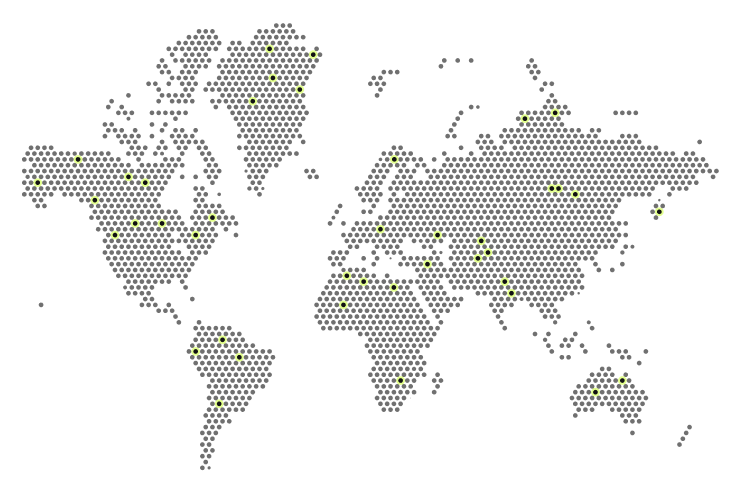
Discover the global proxy network
A reliable service with over 110 million IP addresses covering 195 countries worldwide.

United Kingdom
326K+ active IPs per month

Germany
296K+ active IPs per month

USA
580K+ active IPs per month

France
73K+ active IPs per month

Japan
139K+ active IPs per month

Türkiye
490K+ active IPs per month

China
1.2M+ active IPs per month
A detailed comparison of unlimited rotating proxy plans
Choose the option that best suits your needs
Validity period: 1, 7 or 30 days
Try it
Latest articles and news
FAQ
What are residential proxies?
Residential proxies are proxy servers that use IP addresses provided by internet service providers (ISPs) and/or are located on real (residential) devices, such as laptops, desktops, smartphones, etc. They allow users to connect via an IP address from another region and obtain a local access point for the desired geolocation.
Residential proxies have many advantages and applications, including:
- Increasing connection privacy and reducing tracking when working with public data.
- Testing geo-dependent websites and services from the desired region, verifying localized search results and content.
- Increasing the efficiency of web scraping and collecting publicly available data from open sources.
- Distributed load testing and API integrations from different IP addresses.
- Launching advertising campaigns in different regions.
Unlike server proxies, residential proxies are considered more reliable and better protected from tracking. The residential proxy market offers IP addresses in thousands of locations worldwide, providing a wide selection of connection points for various tasks. Another advantage of residential proxies is that they can have multiple IP addresses at once, allowing for scalable parallel connections for data collection and SEO monitoring.
What is your IP address pool?
By purchasing a plan, you gain access to over 110 million IP addresses collected legally and ethically from all over the world. It’s important to note that the availability of IP addresses at any given time is affected by factors such as time of day and proxy list settings.
Is the IP address stored on my computer?
No, the residential proxy’s IP address is not stored on your computer. When you buy and use a proxy, your computer connects to the proxy server, which redirects your Internet traffic through its IP address. This IP address belongs to the proxy server, not your computer.
Your computer only stores proxy connection settings that allow it to send traffic through the proxy server. The proxy IP address itself is not stored on your device as part of its configuration. Instead, with each request, your computer uses the specified proxy IP address to access the Internet, passing requests through the server’s IP address rather than directly from your device.
How quickly will I receive the proxy after payment?
After purchasing proxies on the website, you’ll gain access to them almost instantly. Typically, the process takes just a few minutes, as the automated system processes the order and provides you with the necessary proxy connection details.
If any delays occur, they may be due to payment verification, but in most cases, proxies are available immediately after the transaction is completed.
How does IP address list authorization work?
When creating a list of dynamic residential proxies, two authorization options are available for users: by login and password or by a list of IP addresses specified in the corresponding field when creating the proxy list. When selecting the “IP list” authorization method, simply connect to the proxy using the previously specified list of IP addresses. However, users can also use the proxy using a login and password from devices with different IP addresses.
Important!
Each IP address added to the list of allowed IP addresses can only be specified once. To reuse this IP address when creating a proxy list, you must delete the previously created proxy list in which this IP address was added to the list of allowed IP addresses.
Can I change my IP address using a link?
This type of rotation is only available for Dynamic Proxies. For dynamic proxies, the Prosox platform offers the ability to select a rotation period based on the following conditions: no rotation (sticky session), per request, or time-based (every 5, 10, 15, or 20 minutes). Due to the nature of residential proxy technology, this approach is a much more stable, faster, and easier way to change an IP address than manually changing it.
Can I test proxies before purchasing?
Yes, you can test proxies on our website before purchasing. Simply contact support with the reason for using them.
We offer plans with a trial period, allowing you to evaluate the service without having to make a full upfront payment.
You can also get residential proxies with limited traffic for a small fee, allowing you to test their performance and functionality.
Do you have duplicate IP addresses?
We strictly monitor the quality of our proxies, ensuring their uniqueness and eliminating any duplicates. Our system ensures uninterrupted rotation of active IP addresses, automatically deletes unused servers, and promptly updates IP addresses, allowing us to provide stable and reliable services.

Would you like to receive a personalized offer?
If you need technical advice or have a specific request, please contact us.
Advanced Strategies for Getting Maximum Value from Unlimited Rotating Proxies
Having access to unlimited rotating proxies is only the first step. Real results depend on how precisely you configure rotation behavior, integrate proxies into your workflow, and measure performance. Teams that treat proxy settings as a strategic lever consistently achieve higher success rates and better scalability than those using default configurations.
Selecting the Optimal Rotation Mode for Your Specific Tasks
The flexibility of rotation settings is one of the strongest advantages of quality unlimited rotating proxies. Using the same mode for every project is one of the fastest ways to lose efficiency.
Here is a practical decision framework based on real-world usage patterns:
| Task Type | Recommended Rotation | Specific Settings Example | Why This Mode Works Best | Typical Success Rate Improvement |
|---|---|---|---|---|
| Managing social media or marketplace accounts | Sticky Session | No rotation for 4–12 hours per profile | Platforms reward session consistency | +20–35% account survival |
| Daily price and assortment monitoring across 15–30 sites | Timed Rotation | Rotate every 10–15 minutes | Balances freshness with stable request patterns | +15–25% fewer blocks |
| Large-scale public data extraction (thousands of pages/hour) | Per Request | New IP on every request | Breaks request patterns most effectively | Highest block reduction |
| Ad verification and geo-testing | Timed or Per Request | 5–10 min rotation during active testing windows | Allows both speed and geographic diversity | Faster detection of issues |
| Long-running automated workflows | Sticky or 15–20 min Timed | Keep same IP for entire workflow cycle | Reduces unnecessary authentication triggers | More stable execution |
Start with these recommendations, then fine-tune based on your actual success rate data from the Prosox dashboard.
Most Common Configuration Mistakes and How to Correct Them
Even experienced users often make these errors when working with unlimited rotating proxies:
- Applying one rotation setting to all projects regardless of platform requirements
- Rotating too frequently on sites that prioritize session stability (leads to more logouts and verifications)
- Not adjusting thread-to-proxy ratio when scaling from 50 to 500+ concurrent tasks
- Ignoring gradual performance degradation and only reacting after major drops in success rate
- Using the same proxy group for both high-anonymity scraping and account-based work
- Failing to combine IP rotation with proper browser fingerprint and timing adjustments
Teams that review success rates and average response times weekly, and adjust rotation settings accordingly, typically maintain 10–25% higher overall efficiency than those who set and forget their configuration.
Scaling Best Practices for High-Volume Operations
When moving from small tests to serious production workloads, these practices become critical:
- Begin with a conservative number of threads per proxy (usually 3–8 depending on target site aggressiveness) and increase gradually while monitoring success rate
- Create separate proxy pools with different rotation rules for different types of work (for example, one pool for scraping, another for account management)
- Use the Prosox API to automatically assign proxies with pre-configured settings to specific tasks or scripts
- Track not only overall success rate but also performance by rotation mode and by country
- Implement automatic alerts when success rate drops below your acceptable threshold for more than 30–60 minutes
Unlimited rotating proxies from Prosox give you the raw capacity. Consistent methodology turns that capacity into predictable, scalable results.
Integrating Unlimited Rotating Proxies with Anti-Detect Browsers and Automation Tools
Most professional workflows combine proxies with anti-detect browsers or custom scripts. Poor integration is a frequent reason for underperformance.
Effective integration practices include:
- Always rotate browser profiles together with IP addresses — never use the same profile with multiple IPs over long periods
- Use sticky sessions when working with anti-detect profiles that require long-term behavioral consistency
- Apply per-request or short timed rotation (5–10 minutes) when speed and maximum anonymity are priorities
- Test new proxy + browser profile combinations on a small batch before deploying to full volume
- Automate proxy rotation and assignment through the Prosox REST API directly from your scraping framework or browser automation tool
When IP rotation, browser fingerprinting, and request timing are coordinated, the combined system performs significantly better than proxies alone.
How to Measure Real Return on Investment
The true value of unlimited rotating proxies goes beyond price per proxy or per GB. More meaningful metrics include:
- Improvement in success rate compared to your previous proxy solution
- Reduction in time spent re-running failed tasks
- Ability to increase daily volume without proportional growth in blocks or manual fixes
- Stability of account-based operations measured over weeks rather than days
- Decrease in overall operational overhead (support tickets, manual interventions, account recoveries)
Many teams discover that a slightly higher investment in reliable unlimited rotating proxies actually reduces total cost of ownership once they account for time saved and higher output quality.
When You Should Revisit and Adjust Your Rotation Strategy
Your optimal settings are not static. Re-evaluate your configuration when any of the following occur:
- Target platforms update their anti-bot or fraud detection systems
- Your daily or hourly task volume increases by 50% or more
- You observe a consistent 5–10% drop in success rate over several days
- You launch projects in new countries or on new platforms
- You shift the balance of your work between data collection and account management
Prosox makes it simple to change rotation settings instantly, so you can adapt quickly without switching providers.
Frequently Asked Questions
How often should I change rotation settings? Review performance metrics in the Prosox dashboard at least once a week. Adjust rotation mode when you see a sustained drop in success rate or when moving to a significantly different type of task.
What is the best starting rotation setting for most scraping projects? For most public data extraction tasks, begin with timed rotation every 10–15 minutes. This offers a good balance between IP freshness and request pattern stability. Switch to per-request only if you still experience high block rates.
Should I use different rotation modes for different countries? Yes. Some countries and platforms are more sensitive to frequent IP changes than others. Test and document the best-performing mode per country or per target site.
How many concurrent threads per proxy are safe? Start with 3–5 threads per proxy on aggressive targets and up to 8–10 on more tolerant sites. Monitor success rate and response time closely when increasing the load.
Can I automate rotation changes based on performance? Yes. Using the Prosox REST API, you can build scripts that monitor success rates and automatically switch between rotation modes or proxy groups when certain thresholds are crossed.
What is more important — pool size or rotation control? Both matter, but precise rotation control often delivers bigger improvements in success rates than simply having access to more IPs. A well-configured smaller pool frequently outperforms a poorly configured larger one.
How do I know if my current rotation settings are optimal? Compare success rate, average response time, and ban frequency across different rotation modes for the same target over a 48–72 hour period. The mode with the best combination of speed and stability is usually optimal.